Your Legacy : Honoring the Lord by continuing to plant Seeds of Hope
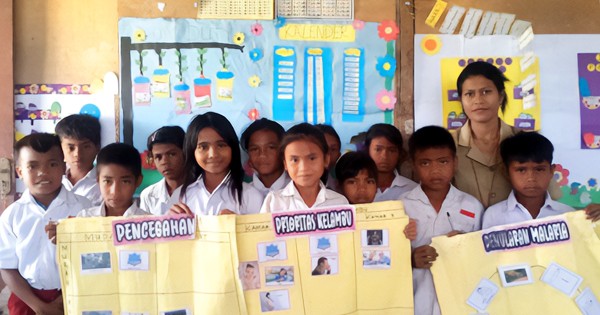
God has used the generosity and the missions minded commitment of His people to support and sustain the work of Mustard Seed International for over sixty years. These gifts come from many different sources…the young and the old, those with abundant resources and those of limited means. But, these gifts always come from those whose hearts have been touched by the living God and by the needs, both spiritual and physical, they see around them in a dark, lost and suffering world.
Regularly we are blessed with a gift from a friend of Mustard Seed who has gone home to be with the Lord. He or she has planned their life, their home going and their legacy to make a difference by including Mustard Seed in their estate. We receive these bequests as a sacred trust. We know their intent is to do all within their means to extend what their earthly life was about…expanding the work of the Kingdom. What a legacy!
DIFFERENT FORMS OF GIFTS
- Outright Gifts
- Gift of Cash
- Securities and Real Estate
- Bargain Sale
- Bequest in a Will
- Revocable Living Trust
- Irrevocable Trust
OUTRIGHT GIFTS
Outright gifts consist of property given or transferred from the person making the gift to a charity that is recognized by the Internal Revenue Service as a tax exempt organization. Such gifts include cash, securities, real estate and tangible personal property. The charity receives the present use of the gift. The person making the gift receives the recognition for making the gift and certain income tax deductions based on the type of gift and the type of charity.
GIFT OF CASH
Income tax deductions for cash gifts by individuals to public charities are deductible up to a limit of 50 percent of the donor’s contribution base for the taxable year in which the gift is made. The contribution base is the donor’s adjusted gross income computed without any net operating loss carryback deduction. To the extent that an individual donor’s cash contributions exceed 50 percent of the contribution base for a taxable year, the excess may be carried forward and deducted (subject to the 50 percent limitation) in the five years following the year of gift until the excess amount of the deduction is used. In applying the limit in a succeeding year, gifts made in the succeeding year are taken into account before a deduction is allowed for any carryover gifts.
The carryover deduction expires with the death of the donor. If the gift is a joint gift and one of the donors dies prior to the expiration of the carryover, the portion of the carryover attributable to the gift made by the deceased joint donor will expire. A terminally ill spouse may want to gift the amount of his or her proposed gift that would exceed 50% of his or her contribution base to the well spouse who could then apply the excess contribution against his or her income in subsequent years.
SECURITIES AND REAL ESTATE
Gifts of appreciated securities and real estate held long-term (more than one year) are deductible at full present fair market value, with no income tax on the appreciation in excess of the purchase price. The deduction is limited to 30% of the taxpayer’s contribution base. The donor can elect to increase the deduction in a year to 50% of the contribution base for the same gift by reducing the amount of the deduction to the donor’s cost basis in the real property.
Gifts of appreciated securities and real estate held short-term (less than one year) are limited to the cost basis, but deductible up to 50% of the donor’s contribution base.
BARGAIN SALE
A bargain sale occurs when a donor transfers securities or real estate to a charity in exchange for a price that is lower than the property’s appraised fair market value. The donor has made a part gift and part sale. The excess of the fair market value of the property over the sales price becomes the amount of the charitable contribution. The sales price less a pro rata part of the donor’s basis (cost) is recognized as a gain to the donor. The benefit to the charity is that it acquires property needed for office use or expansion at a discounted price. The benefit to the owner is that he or she may make a partial gift while being partially paid for the property.
Retained Life Estate in Residence
A donor may give his or her residence to a charity, and continue to live there for his or her lifetime. The agreement can be for one or two lives or for a term of years. The donor receives an immediate income tax deduction for the present value of the remainder interest given to the charity. The property may be the donor’s principal residence or a second home.
Charitable Remainder Trust
A charitable remainder trust provides a payment to one or more individuals for life or a fixed term and the remainder to a charity. The charity is to become the beneficiary after a certain number of years. This designation of a charity as the ultimate beneficiary cannot be changed once the trust is signed although the specific charity can be changed. A charitable remainder trust must be irrevocable.
A charitable remainder trust is best used when a charitably inclined person owns appreciated property that he or she wishes to sell either to diversify or to produce a greater income stream. By contributing this property to a Charitable Remainder Trust, the donor receives an immediate income tax deduction for the value of the charitable remainder interest. The trustee of the charitable remainder trust can sell this appreciated property and invest the entire net proceeds received from the sale. There will be no capital gains tax paid on the sale. The donor will continue to receive income from this gift for the term of the charitable remainder trust.
There are two types of charitable remainder trusts. They are a charitable remainder annuity trust (CRAT) and acharitable remainder unitrust (CRUT). The main difference between a charitable remainder annuity trust and a charitable remainder unitrust is the manner in which the income to the beneficiaries of these trusts is determined. A charitable remainder annuity trust provides for a fixed payout to be made to the income beneficiaries. The payout is a set-dollar amount, a fixed percentage or a fraction of the value of the initial contribution to the trust.
An example of a Charitable Remainder Annuity Trust is where a donor contributes assets with a fair market value equal to $1,000,000, to a Charitable Remainder Annuity Trust that will pay the donor or another specified person five percent of the amount contributed each year. The person donating the property or a specified person will receive $50,000 a year for life or for a fixed number of years. This annual return is paid by the Trustee regardless of the investment performance of the trust assets. The return to the donor will not be affected by varying levels of income earned by the trust assets or by appreciation or depreciation in the market value of trust assets.
A Charitable Remainder Unitrust (CRUT) provides for a fixed percentage of the fair market value of the trust assets valued annually to be made to the income beneficiaries. While the percentage of the value of the trust assets to be received annually is fixed, the distribution will vary from year to year as the annual fair market value of the trust assets changes. Thus, the Charitable Remainder Unitrust protects the non-charitable lifetime beneficiary’s cash flow from the effects of inflation. However, the Charitable Remainder Unitrust is more difficult to administer because the trust property must be revalued every year to calculate the unitrust payment amount. An example of a Charitable Remainder Unitrust is where a person contributes assets with a fair market value equal to $1,000,000, to a Charitable Remainder Unitrust, that will pay the donor or another specified person five percent per year. The distribution in the first year will be $50,000. If the trust assets have increased to a market value of $1.5 million, the distribution to the donor or the person designated by the donor will be $75,000 (5 percent x $1.5 million) in that year. If the trust assets decrease to a market value of $500,000, the payout in that year will be $25,000 (5 percent of $500,000).
Charitable Lead Trust
A Charitable Lead Trust provides that the charity is to receive an income stream for a fixed number of years or for the life or lives of an individual or individuals. At the end of this term, the principal of the trust is returned to the donor or to an individual specified in the trust agreement. A Charitable Lead Trust must be irrevocable. However, the donor can retain the power to change the charity which is to receive the income interest.
The grantor of the Charitable Lead Trust is entitled to an income tax deduction only if the trust continues to be treated as owned by the grantor. This means that the income earned on the trust will be taxed to the grantor. However, the grantor will receive a present income tax deduction in the year in which the trust is created. The income tax deduction is the present value of the expected income stream to charity.
If the grantor of the Charitable Lead Trust is not treated as the owner of the trust, then no income tax deduction is allowed, but the grantor is not taxed on the income earned by the trust. The trust is entitled to an income tax deduction for the income that is paid to the charity each year.
Pooled Income Fund
Another form of creating a partial interest gift to charity is through the use of a pooled income fund. This is an arrangement created and managed by a charity. A person donates his or her assets, and these assets are pooled in a fund with other investor’s assets. Each donor to this fund is entitled to receive a share of the annual net income earned on the trust assets. The income will vary each year on the basis of the investment performance of the pooled fund. The donor’s share in the assets is paid to the charity when the investor dies. The donor contributing to the pooled income fund receives a charitable deduction for the present value of the interest that is expected to be received by the charity on the death of the contributor. The amount of this charitable deduction depends, in part, on how much income the donor expects to receive annually.
BEQUEST IN A WILL
A person who wants to retain the ownership of an asset until death can still leave this asset to a charity at his or her demise. A valid will ensures that the asset will be distributed to the charity at death. However, there must be other assets from which the deceased’s claims for final illness, other debts, taxes and probate administrative expenses will be paid. Otherwise, the asset intended for the charity must be liquidated by the executor to pay these expenses. If a person dies without a valid will, a statute dictates to whom the assets are distributed. This statute, which names certain heirs as beneficiaries, is inflexible and will apply regardless of the deceased person’s desires or wishes.
REVOCABLE LIVING TRUST
A trust established during the lifetime of the person creating the trust and which is revocable is commonly known as a living trust. A settlor or grantor is a person creating the trust. When a living trust is established, a trustee must be appointed to manage and later distribute the trust assets to the beneficiaries. The beneficiaries are the persons or charities who ultimately receive the assets from the trust. A charity can be a beneficiary of a revocable trust. Only assets conveyed to the trust can be administered by the trustee, who owns the legal title to the trust assets for the benefit of the beneficiaries. Assets not conveyed or transferred to the trustee are subject to probate. A pour-over will is used to distribute to the trustee assets not owned by the trustee when the settlor or grantor dies. These assets are then administered and distributed to the beneficiaries named in the trust. A trust established during the lifetime of the grantor or settlor is either revocable or irrevocable. A revocable trust permits the grantor or settlor to revoke the trust, alter the terms of the trust, or withdraw some or all of the assets from the trust. A revocable trust becomes irrevocable at the death of the grantor or settlor.
IRREVOCABLE TRUST
Another form of trust is an irrevocable trust, one that cannot be amended or altered. The assets conveyed to an irrevocable trust cannot be withdrawn or returned to the grantor or settlor. An irrevocable trust is normally created for estate tax purposes. A person will transfer assets to an irrevocable trust to avoid having to include the fair market value of these assets in his or her taxable estate at death. It is important to remember that a transfer of an asset to an irrevocable trust constitutes a gift. Accordingly, the fair market value of the asset on the date of the transfer to the trust must be reported to the Internal Revenue Service as a gift by April 15 after the year of the transfer. The taxpayers estate or gift tax unified credit will be applied to the gift taxes due as a result of this transfer. The advantage of transferring assets to an irrevocable trust is that the appreciation in the value of these assets after the gift will not be subject to federal estate taxes upon the taxpayer’s death.
Life Insurance
The gift of a fully paid-up life insurance to a charity permits a donor to deduct on his or her income tax return an amount equal to its replacement value. If that replacement value exceeds the donor’s cost basis in the policy (premiums paid minus dividends received), the deduction is limited to the policy’s basis since a sale or exchange of the policy would not produce long-term capital gain.
If premiums remain to be paid on the policy, the deduction generally is equal to the lesser of the cost basis, or the interpolated terminal reserve (approximately cash surrender) plus the unearned portion of the last premium paid by the donor. The deduction would be reduced by the amount of any policy loan outstanding.
Designated Beneficiary of IRA
An owner of an Individual Retirement Account (IRA) can name a charity as a beneficiary. The inclusion of a charity as a beneficiary of all or part of the IRA proceeds will not affect the distributions during the lifetime of the IRA owner. A designation of a charity as the beneficiary of the IRA will cause these funds to not be subject to income or estate tax after the owner’s death.
Sample Charitable Bequest Language
Unrestricted bequests are preferred since the amount donated may then be used where most needed. However, a bequest to a specific mission or ministry will be honored. Please consult with a representative of THE MUSTARD SEED, INC. before establishing a restricted gift.
Specific Bequest
“I give and bequeath to THE MUSTARD SEED, INC., a California corporation, the sum of $___________ to be used for the general purposes of the corporation.”
Percentage Bequest
“I give and bequeath to THE MUSTARD SEED, INC., a California corporation, _____ ( %) per cent of my estate (trust) to be used for the general purposes of the corporation.”
Residuary Bequest
“I give and bequeath to THE MUSTARD SEED, INC., a California corporation, the rest, residue and remainder of my estate (trust) to be used for the general purposes of the corporation.”
Contingent Bequest
“In the event any of the above named beneficiaries shall not survive me, I give and bequeath that beneficiary’s share of my estate (trust) to THE MUSTARD SEED, INC., a California corporation to be used for the general purposes of the corporation.”
Restricted Bequest
“I give and bequeath to THE MUSTARD SEED, INC., a California corporation, _____ ( %) per cent of my estate (trust) to be used for the following purposes___________________________.”